
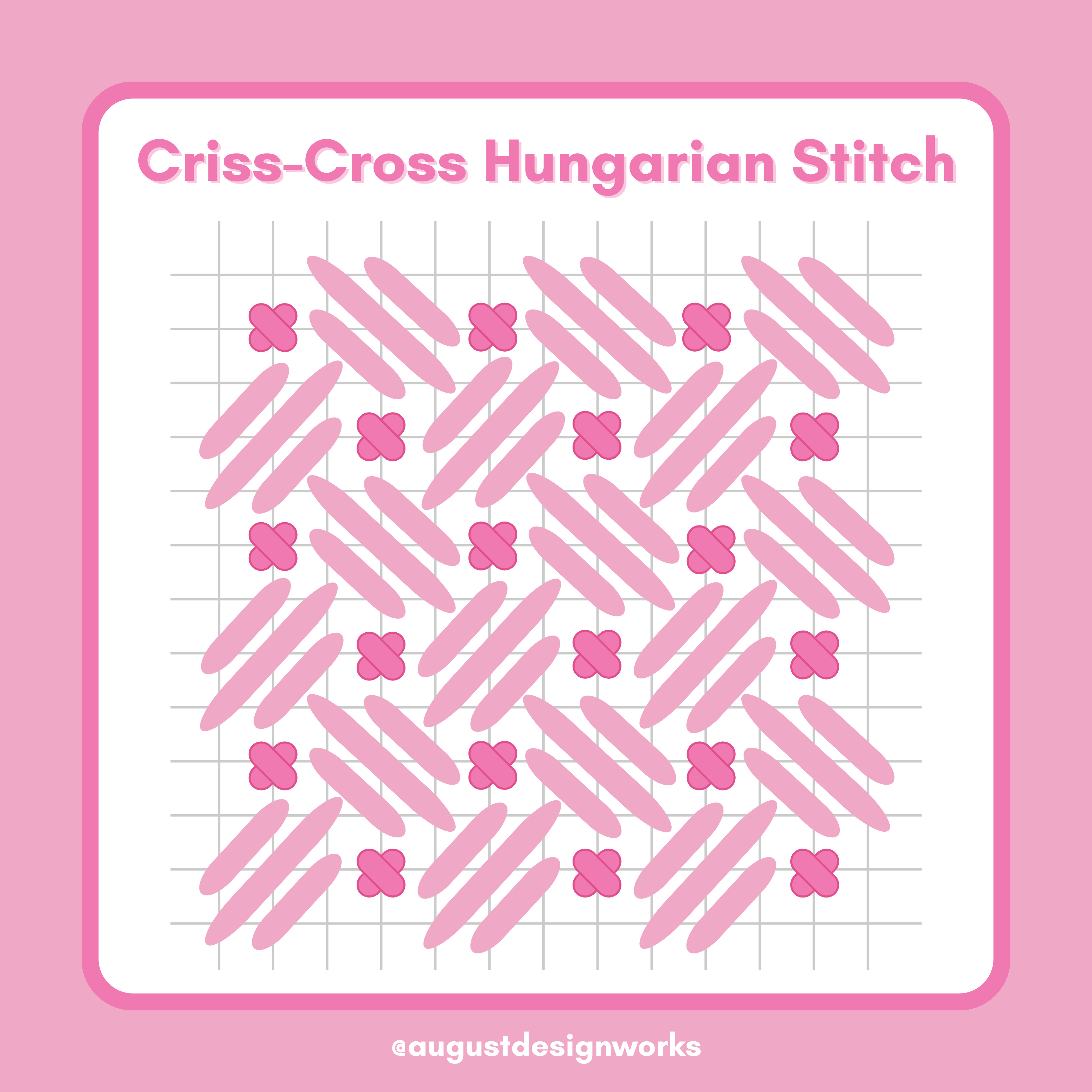
Criss-Cross Hungarian Stitch Guide
Criss-cross Hungarian stitch is a decorative needlepoint stitch that creates a layered, woven texture with a lot of visual interest. The overlapping stitches form a structured pattern that feels dimensional without being overly complicated.
This stitch is built from a repeating sequence of straight stitches worked in different directions. While it looks intricate once completed, the pattern itself is very methodical, making it a great option when you want texture that still feels controlled and intentional.
When to Use Criss-Cross Hungarian Stitch
Criss-cross Hungarian stitch works well when you want to add depth and texture to an area without introducing too much movement. The layered pattern fills space nicely and draws the eye without overpowering the design.
It’s commonly used for backgrounds, clothing, decorative elements, or anywhere you want a stitch to stand out while still feeling cohesive with the rest of the piece.
How Criss-Cross Hungarian Stitch Is Worked
Criss-cross Hungarian stitch is worked in rows using straight stitches that overlap and cross over one another. The stitch pattern alternates direction as you build the rows, creating the characteristic criss-cross effect.
As you stitch, it’s helpful to focus on completing one section of the pattern at a time rather than jumping around. Keeping the stitch order consistent helps the pattern stay clear and even across the canvas.
If this is your first time using criss-cross Hungarian stitch, take your time at the beginning and double-check stitch placement until the rhythm feels familiar.

Example in a Real Project
Here’s an example of criss-cross Hungarian stitch stitched in a real project, showing how the overlapping stitches create texture and dimension while still feeling structured.

Tips for Success
- Start slowly and focus on the order of the stitches to keep the pattern consistent.
- Pay attention to stitch direction so the criss-cross effect stays clear and intentional.
- Keep your tension even to prevent the layers from pulling or distorting the canvas.
- Trust the process... the stitch often looks busy at first, but the pattern becomes more balanced as the area fills in.
Criss-cross Hungarian stitch is a great option when you want a stitch that adds interest and depth while still feeling polished and intentional.

Written by Emma Bentley

Leave a comment
This site is protected by hCaptcha and the hCaptcha Privacy Policy and Terms of Service apply.